 Languages

 Contact us
 My Account
 My Cart



ALLEN BRADLEY 1492-IFM40F
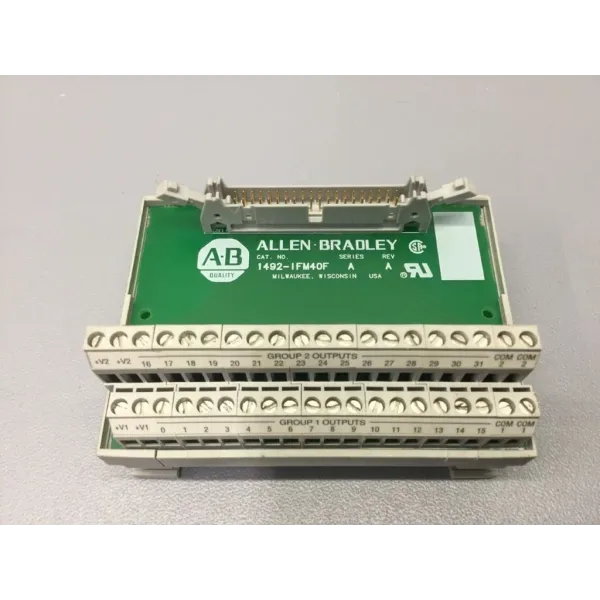
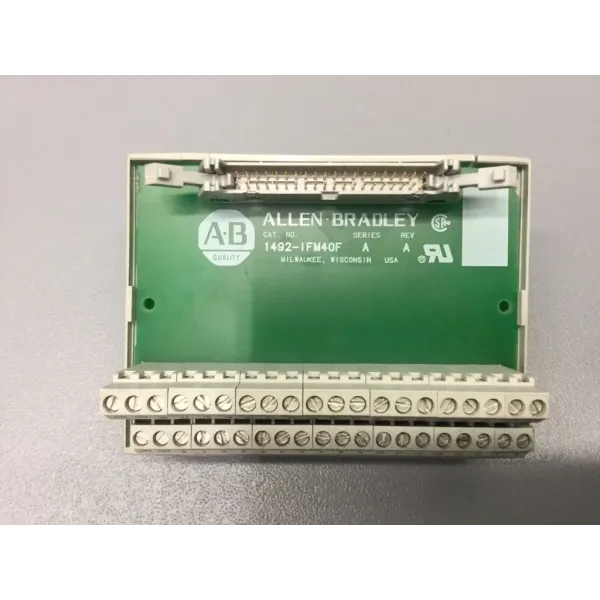
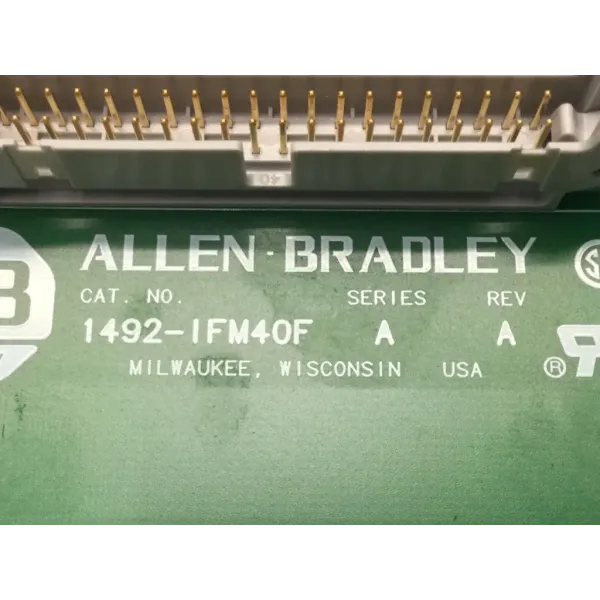


The ALLEN-BRADLEY 1492-IFM40F interface module easily connects 40 I/O points between your PLC and your field devices.
Designed for industrial environments, it simplifies wiring and ensures reliable signal transmission in your control panels.
Product details
The ALLEN-BRADLEY 1492-IFM40F interface module from the 1492 series meets the needs of signal centralization in industrial automation systems. With its 40 I/O channels, it efficiently connects your programmable controller to sensors, actuators, and other field devices in your electrical cabinet.
This module provides a compact and reliable solution to densify your connection points without taking up too much space on the DIN rail. Its design simplifies wiring organization and helps maintain your installations by reducing the number of scattered connections.
Key features of the 1492-IFM40F
- 40-channel interface: groups up to 40 I/O points on a single module to optimize cabinet space
- Simplified wiring: reduces the complexity of connections between the PLC and field devices
- PLC integration: designed to work with Allen-Bradley control systems
- DIN rail mounting: standardized installation on industrial mounting rails
- Industrial reliability: suited to production environments and automation constraints
Applications and uses
The 1492-IFM40F fits into control cabinets for industrial machines, automated production lines, or industrial building control systems. It is particularly useful when you need to connect a large number of sensors and actuators to your controller without multiplying scattered I/O modules.
Whether for a new installation or renovating existing equipment, this interface module facilitates signal transmission and contributes to the overall reliability of your automation system. It allows technicians to save time during initial wiring as well as during maintenance operations, thanks to a clear organization of connections.
REI Industry is not an official distributor or authorized representative for the products sold on its website.
Items sold on the website come from the deconstruction and reuse channel of REI Industry. They may also come from retail overstock (new products) acquired by REI Industry.